

- Start with your problem, and choose a book written for readers like you.
- Check the author’s training, then look for studies that test the book’s methods.
- Pick a book whose chapters give you steps you can actually do.
- A book supports treatment and never replaces a doctor or therapist.
- Canadian libraries and free online books are a good place to start.
Table of Contents
- Match the Book to Your Problem
- Who Wrote It, and on What Evidence
- Exercises That Change Something
- What a Book Can and Cannot Do
- Starting Points You Can Find in Canada
- Frequently asked questions
A self-help book can feel like an easy first step when you’re struggling. Yet many popular titles promise far more than they deliver.
So how do you tell which book will really help you? In this article, we’ll look at how to judge a book before you buy it, and where to start in Canada.
Match the Book to Your Problem
Start with the problem you want help with, not with the title. A book that suits one problem may do little for another. Then check that it is written for readers like you.
Mind Over Mood covers many problems, from anxiety and anger to substance use. Dealing With Depression: Antidepressant Skills for Teens is written for teens with low mood, so if you are a teen, pick that one.
Begin with a list sorted by diagnosis. Pacific Bibliotherapy, maintained by psychiatrist Martina Scholtens, sorts its books into seven areas, such as depression and anxiety or dementia.
Before you buy, ask three things. Does this book cover my problem? Does it teach exercises I can do alone?
Will I need a provider alongside it? The Canadian Centre for Innovation in Peer Support calls its Bookshelf titles general suggestions.
Who Wrote It, and on What Evidence
Start with the author’s training. Dennis Greenberger and Christine A. Padesky are both clinical psychologists, and Greenberger founded the Center for Cognitive Therapy in Newport Beach, California.
Training is only the first check. It shows the author is qualified, not that each exercise has been tested. An author’s own recovery or a reader’s story is not a test, so look for studies of the methods themselves.
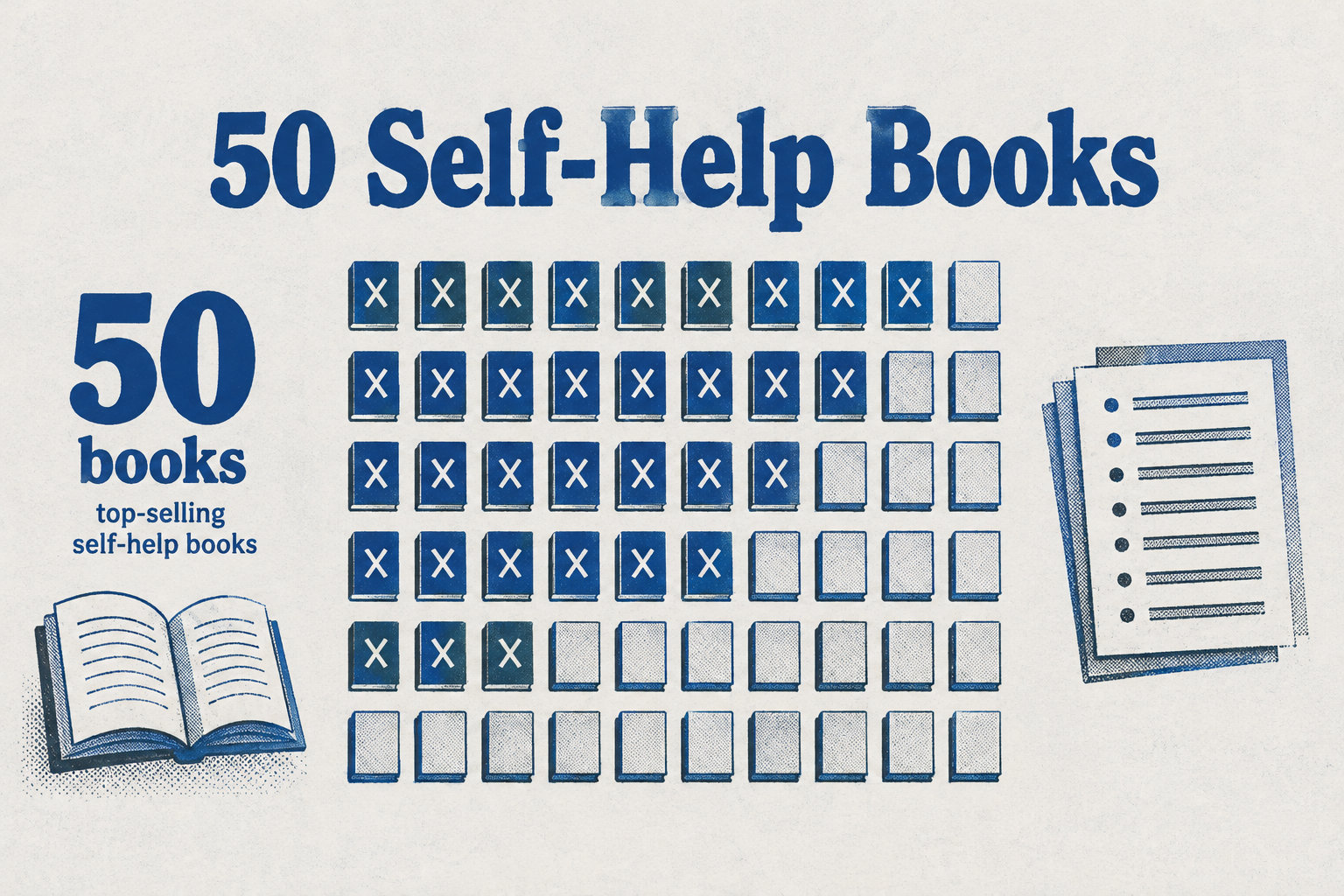
Being a bestseller doesn’t make a book reliable. In a 2008 study, experts reviewed 50 top-selling self-help books on anxiety, depression and trauma. More than half included strategies that lacked evidence.
Check the reference section before you buy: each claim should trace back to an original study. If it doesn’t, treat the advice as a personal idea, because untested advice can delay the support you need.
Exercises That Change Something
Pick one chapter and look for a step you can actually do. Books built on exercises, like Mind Over Mood with its more than 50 worksheets, show them clearly. If the chapter has none, expect mostly talk.
Then try that step in daily life for a few days. If you can say its steps without rereading, keep the book. If not, leave it on the shelf.
For anxiety or phobias, look for exposure exercises, which means facing the situation step by step. The Anxiety & Phobia Workbook has a full chapter on them.
For depression, The Antidepressant Skills Workbook offers small scheduled activities, ways to challenge negative thoughts, and action plans. For bipolar disorder, The Bipolar Disorder Survival Guide uses mood charts and social-rhythm charts to track your routine.
What a Book Can and Cannot Do
A self-help book is a low-cost way to work on a problem while you wait for care. For mild to moderate depression, it can work on its own or alongside medication, ideally with a clinician checking on your progress.
For anxiety, self-help books have improved symptoms, but the research is thinner. Start with the lightest option that fits your symptoms and how much they disrupt your daily life.
A book is not enough when symptoms are serious. If you have thoughts of harming yourself, or your low mood lasts most days for weeks, see a doctor or mental-health provider now.
For serious depression, the workbook alone won’t be enough, so you need treatment such as CBT or antidepressant medication. In Canada, if you are in crisis, call or text 9-8-8 at any time.
Starting Points You Can Find in Canada
Two strong starting points are worth knowing. The Antidepressant Skills Workbook is free to read or download. It has audio chapters and versions in English, French, Punjabi, Chinese, Vietnamese and Farsi, and it can be used with depression treatment.
The Mindful Way Through Depression teaches mindfulness exercises for recurring depression. Its authors include Zindel Segal, a psychology professor at the University of Toronto Scarborough, and researchers from Oxford and Massachusetts.
Want a list for your problem? Pacific Bibliotherapy sorts its reading lists by condition, from depression and anxiety to eating disorders and dementia. Patients and caregivers can both browse them.
Toronto Public Library has Mind Over Mood in print and as an ebook. Borrowing depends on the format and on whether that copy is out on loan, so check the catalogue first.
Start with your problem, not the title. Check the author’s training and look for tested methods. A book supports care; it never replaces a doctor or therapist.
Next, borrow one book and try one exercise from its first chapter for a few days. If the steps are clear, keep going. If your symptoms are serious, see a provider now.
Frequently asked questions
Can I borrow mental health books for free from a Canadian public library?
Yes. Your public library’s catalogue lists print and ebook copies you can borrow for free. Toronto Public Library, for example, has Mind Over Mood in both formats.
Check the catalogue first, since a copy that is out on loan can’t be borrowed.
Is an ebook or audiobook as useful as a print workbook for doing the exercises?
Yes, an ebook can be as useful as a print workbook, as long as you can read the steps and fill in the worksheets on it.
An audiobook is a weaker choice for exercises, because you can’t complete a worksheet by listening.
How long should I try a self-help book before deciding it is not working?
Don’t set a fixed number of days. Do the exercises as directed and track how you feel each day, then decide from that record.
If your symptoms persist, get worse or disrupt your daily life, ask a health professional for help without waiting.
Should I tell my doctor if I am reading a self-help book?
Yes, tell your doctor. Ask them whether the book fits your needs and whether you should use it alongside your other care. This way, they can follow your progress and adjust your plan if needed.
Read next: When Is Soccer Season? A Guide to Amateur and Pro Calendars