
A standard soccer game is 90 minutes, played as two halves of 45, but the real time on the pitch is always a little longer. Stoppage time, the halftime break and, in knockout matches, extra time all add to the total, so it helps to plan around a window rather than a single number. Amateur fixtures also have their own habits, which is where most of the surprises come from.
How long is a standard soccer game?
The standard length of a soccer game is 90 minutes, split into two equal halves of 45 minutes each. This is often called regulation time, and it is set out in the Laws of the Game. The reason soccer feels so consistent compared with other sports is the clock: it does not stop for fouls, substitutions or injuries, so the match runs on one continuous count.
That continuous clock is what makes the sport easy to schedule around. Whatever team, league or competition you are watching or playing in, you are planning for roughly the same block of time, rather than an open-ended afternoon.
It is worth knowing that the 90 minutes is a minimum for the playing time, not a promise about when you will be home. The match ends when the referee blows the final whistle, not when the clock reaches a round number.
What is stoppage time and why does it matter?
Because the clock keeps running during interruptions, the referee adds time at the end of each half to make up for what was lost. You will hear this called stoppage time, added time or injury time. The fourth official usually shows the amount on a board so that players, coaches and spectators know roughly how much is left.
The amount depends on what happened in the half. Time can be added for substitutions, injuries, delays to restarts and other interruptions, and for any medical or drinks breaks the competition allows. A short delay may add very little, while a serious injury or a long celebration can add a good deal more.
Typical amounts
Usually, stoppage time falls somewhere between one and three minutes per half. In extreme circumstances it has stretched to as many as ten minutes.
For you as an amateur player, the practical point is simple: do not assume your match finishes exactly on the 90-minute mark. Treat the last few minutes of each half as flexible, and stay switched on until the whistle.
How long does halftime last, and is it different at amateur level?
Halftime comes after the first 45 minutes, and teams are allowed up to 15 minutes to rest, rehydrate and listen to their coach.
The referee can shorten the break, and a halftime of ten minutes or less would not be unusual in a Sunday league or youth match.
This has a direct consequence for how you use the break. If you only have a short interval, decide in advance what matters most:
- Drink first, so you start the second half hydrated.
- Take a few moments to sit or stand quietly and lower your breathing rate.
- Keep any tactical talk short and specific, since there is little time for more.
- If it is cold, put a layer on and take it off again before kick-off.
A short, calm routine is more useful than a rushed one. Knowing the break may be brief lets you arrive at halftime with a plan rather than a scramble.
How long is extra time, and when does it happen?
Extra time applies only in knockout matches where one side has to go through. If the score is level after 90 minutes, the teams play 30 further minutes, divided into two halves of 15. The break between those halves is much shorter than the normal halftime, with only a brief pause for water.
If the teams are still level after extra time, the clock stops altogether and a penalty shootout decides the winner. A shootout has no fixed length, because it continues until one side has come out ahead.
To see what this means for your day, consider two examples. An ordinary league match without extra time that kicks off at 3pm, once halftime is included, finishes at roughly 4:45pm, a total of about an hour and 45 minutes. A knockout match that begins at the same time and is settled in extra time will be over at around 5:30pm.
Always check the rules of your own competition rather than assuming the professional format applies.
How should you plan your day around a match?
The sensible approach is to think in terms of a window, not a duration. Count the match itself, the halftime break and some allowance for stoppage time, then add the time you need before and after. For a standard league game, that comfortably fills a couple of hours before you even consider travel.
Before the match
Arrive early enough to warm up properly without rushing. Eat a sensible meal well ahead of kick-off, and avoid trying something new on match day. If work or family commitments squeeze your morning, it is better to reduce the warm-up slightly than to arrive stressed and late, because a calm start helps both your body and your head.
After the match
Leave space for the end of the game rather than booking something tight straight afterwards. Cooling down, drinking, eating and talking with teammates all take time, and they are part of how you recover. If you have to dash off, a short walk and a drink before you go is better than stopping dead.
Talking it through at home
If you juggle a job and a family, agree the timings with the people involved in advance. Tell them the kick-off time, a realistic finish time and a possible overrun. When everyone expects a window, a late whistle is much less likely to turn into an argument. This small piece of planning takes pressure off, and a lower-stress match day is usually a more enjoyable one.
Frequently asked questions
Does the clock stop in soccer when there is a foul or injury?
No. The clock in a soccer match keeps running through fouls, substitutions and injuries. Instead, the referee adds stoppage time at the end of each half to make up for the time lost.
How much stoppage time should you expect?
It usually falls between one and three minutes per half, although it can be longer after a serious injury or a lengthy delay. In extreme cases it has reached as much as ten minutes. The match only ends when the referee blows the final whistle.
Is halftime always 15 minutes?
Halftime lasts up to 15 minutes, but the referee can shorten it. At amateur level, a break of ten minutes or less is not unusual, especially in Sunday league or youth matches.
What happens if a knockout match is tied after 90 minutes?
The teams usually play 30 minutes of extra time in two halves of 15. If they are still level, a penalty shootout decides the winner. Amateur competitions may use different rules, so check yours.
Related reading
- Goalkeeping for Outfield Players: A Week in the Other Position
- Coming Back to Sport After Years Away
Sources
- How long are soccer games? (sports.yahoo.com, accessed 2026-11-02)
- Basic soccer rule: How long is a soccer game? (goal.com, accessed 2026-11-02)
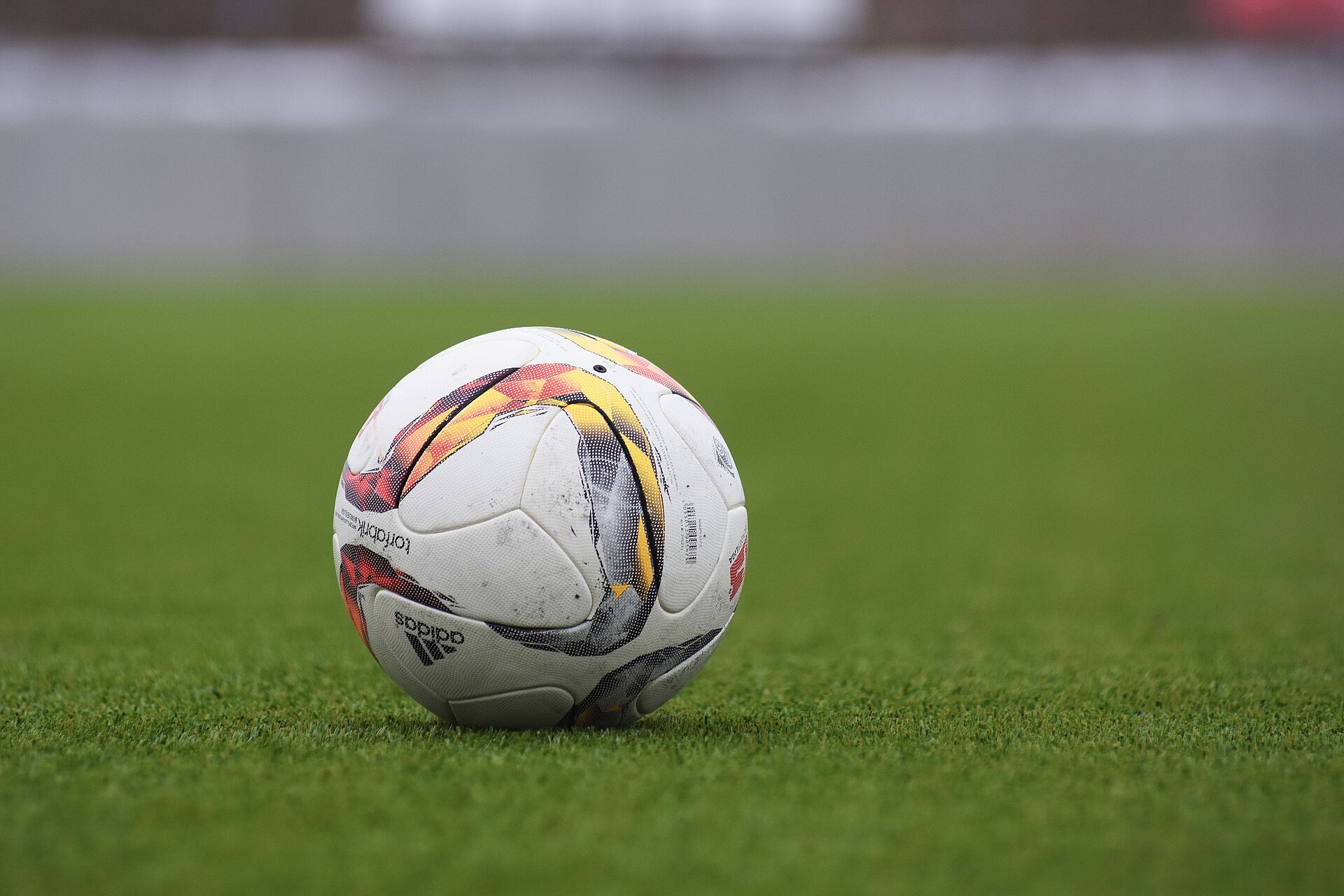
Photo: Adidas soccer ball on a grass pitch (Unsplash), by Peter Glaser baraida, CC0 (Wikimedia Commons)