
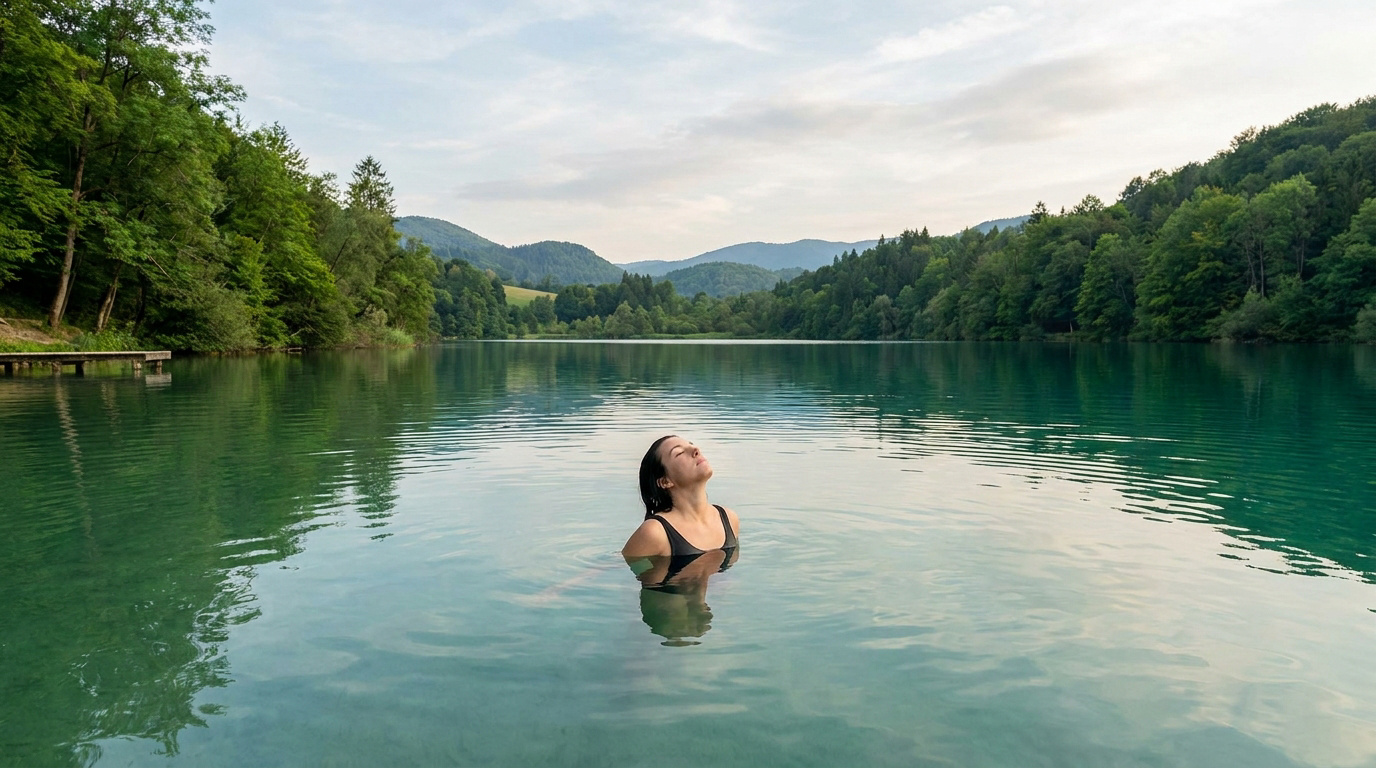
Key takeaway: Wild swimming is associated with dopamine changes and vagus nerve activation, providing an immediate neurochemical reset for anxious minds. By forcing absolute sensory presence and supporting nervous system regulation, cold water immersion transforms acute shock into long-term emotional resilience. Regular exposure may support sleep quality and restore cognitive clarity through natural parasympathetic stimulation.
Immersion in cold water is associated with changes in dopamine levels while simultaneously activating the vagus nerve, which may influence cortisol, according to research including work published by neuroscientist Andrew Huberman and cold water immersion studies reviewed in journals such as the International Journal of Circumpolar Health. This physiological shift provides a raw biological stimulus that indoor exercise simply cannot replicate for mental clarity.
We often remain trapped in ruminative loops where mental noise feels impossible to silence. This article explores how wild swimming may act as a natural circuit breaker to regulate your nervous system and help you regain control over an anxious mind.
- Wild Swimming Anxiety Benefits For Mental Clarity
- 3 Ways Nature Immersion Stops Overthinking
- How To Manage The Initial Cold Shock Safely?
- Building Resilience Through Social Water Groups
Wild Swimming Anxiety Benefits For Mental Clarity
Cold water immersion is associated with dopamine changes and activates the vagus nerve, which may influence cortisol levels. Safe practice requires acclimatization, tow floats, and peer support to transform acute cold shock into long-term neurochemical stability. These physiological changes start the moment your skin hits the water.
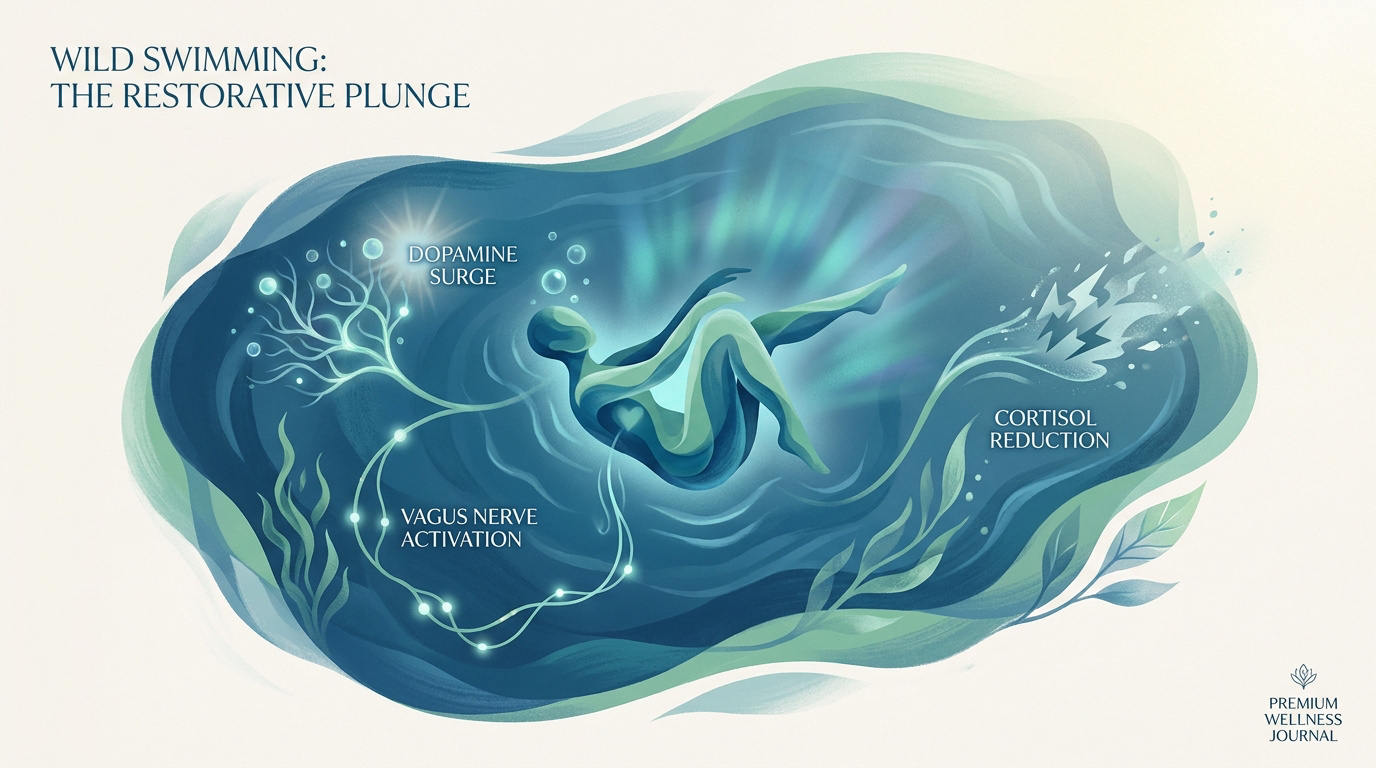
The Neurochemical Shift Of Cold Exposure
The initial shock is associated with changes in dopamine and serotonin levels, a pattern noted in cold exposure research. This shift is reported by many swimmers as a natural high. You feel a mood lift that persists for several hours after drying off.
Your body initiates a physiological reset by prioritizing core survival. It shuts down non-essential stress signals immediately. This process reboots the endocrine system. It may help the body clear stress hormones associated with chronic anxiety.
Natural cold provides a raw biological stimulus that differs meaningfully from the controlled environment of indoor exercise.
Nervous System Regulation In Blue Spaces
Cold water hitting your face is thought to stimulate the vagus nerve, potentially triggering the parasympathetic branch, a mechanism explored in research on the diving reflex and autonomic nervous system responses. It may shift your body from “alert” to “calm” without any conscious effort.
Spending time in blue spaces is associated with reduced mental overstimulation. Natural water environments are linked to lower cortisol levels. Chlorinated, loud indoor pools simply fail to provide this deep sensory relief.
Connecting with nature improves heart rate variability. Regular immersion builds a resilient nervous system. You begin to handle daily stressors with grace rather than falling into a panic.
3 Ways Nature Immersion Stops Overthinking
While the chemistry changes inside, the mental loops we get stuck in begin to unravel through pure sensory demand.
Breaking Ruminative Loops Through Forced Focus
Cold water creates immediate sensory overload. Your brain cannot process “what if” scenarios when skin is stinging. Survival instincts demand absolute presence in the water right now.
Mental noise shifts toward physical awareness. You stop worrying about work or messy relationships. Instead, you focus on the rhythm of your breath. This acts as a circuit breaker for intrusive thoughts.
A quiet mind brings immense relief. For many, the water is the only place where ruminative loops stop. This mental silence provides a needed break for the exhausted anxious brain.
Autonomy And Mastery In Non-Clinical Recovery
Behavioral activation theory explains this perfectly. Taking the step to enter cold water is a powerful anti-depressant action. It proves you control choices despite fear. This builds internal agency and strength.
Overcoming wind and waves builds genuine self-esteem. You realize you are capable of handling discomfort. This mastery transfers directly to challenges faced on dry land.
The non-clinical aspect is vital. You aren’t a patient in the lake; you are an active participant in your health. This shift in identity is essential for long-term psychological recovery.
How To Manage The Initial Cold Shock Safely?
Mastery over the mind starts with mastering the physical panic that hits during the first sixty seconds of immersion.
Mastering The Fight Or Flight Response
Focus on controlled breathing. Exhale slowly as you enter the water to prevent the gasp reflex. This sends a signal to the brain that you are not in danger.
Explain how to calm the heart rate. Avoid jumping in headfirst immediately. Let your body adjust gradually to the temperature. Slow, rhythmic movements help dampen the fight or flight response.
Stay close to the shore. Knowing you can exit at any time reduces the psychological pressure of the shock.
Selecting Safe Locations And Required Gear
Outline essential beginner gear. A bright tow float is mandatory for visibility and rest. Neoprene boots and gloves protect your extremities from numbing. These tools provide a safety net that lowers baseline swimming anxiety.
Identify supervised entry points. Choose spots with easy access and clear exits. Avoid areas with heavy currents or boat traffic. Researching the location beforehand prevents unexpected panic during the swim.
Check the weather. Wind and tides change the safety profile of any open water site.
Medical Precautions And Medication Management
Address psychiatric medication. Some drugs affect the body’s ability to regulate temperature. Cold water may alter how your body experiences certain medication side effects. Always consult a medical professional before starting a regular wild swimming practice.
Include the medical disclaimer. Never stop or change your medication dosage without a doctor’s approval. Wild swimming is a complementary tool, not a replacement for clinical treatment or therapy.
Listen to your body. If you feel dizzy or confused, exit the water immediately and warm up.
Building Resilience Through Social Water Groups
Beyond the individual gear and safety checks, the true strength of this practice lies in the community that gathers at the water’s edge.
Social Connection And Accountability
Join local swimming communities. Having a group waiting for you ensures accountability on cold mornings. Shared experiences reduce the isolation often felt with chronic anxiety and depression.
Discuss shared vulnerability. Everyone looks the same in a swimsuit and a bobble hat. This stripping away of status builds deep social bonds and authentic human connection.
Laughter is medicine. The post-swim social interaction is as beneficial as the water itself.
Winter Consistency And Sleep Quality
Maintain winter consistency. Short dips are better than skipping months. The physical process of thermoregulation may support hormonal conditions that favour sleep later in the evening. This can help regulate the circadian rhythm. Consistent practice leads to deeper sleep cycles.
Combat insomnia symptoms. The physical exhaustion from thermoregulation helps the mind shut down at night.
Keep it brief. In winter, three minutes is often enough to reap the rewards.
Body Confidence And Long Term Recovery
Shift from aesthetic focus to capability. You stop caring how you look and start marveling at what your body can do. This builds body confidence rooted in function.
Discuss holistic well-being. Nature-based activity integrates the mind and body. It moves you away from clinical labels toward a thriving lifestyle. This is the core of sustainable mental health.
Embrace the ritual. The warm-up process and hot tea are essential parts of the healing.
Wild swimming is associated with neurochemical changes, with dopamine shifts and vagus nerve activation thought to influence stress hormone levels. By forcing absolute presence in nature, this practice breaks ruminative loops and builds lasting mental resilience. Start your cold water journey safely today to transform acute stress into profound, long-term clarity.
FAQ
How does wild swimming help with anxiety?
Wild swimming acts as a powerful physiological reset for an anxious mind. The initial shock of cold water is associated with changes in dopamine and serotonin, providing a natural mood lift that many swimmers report lasting for hours. This biological stimulus forces the body to prioritize core survival, which may help reduce accumulated stress hormones and quiet non-essential stress signaling.
Additionally, immersion stimulates the vagus nerve, which activates the parasympathetic nervous system. This transition from a “fight or flight” state to a “rest and digest” state helps lower cortisol levels and improves heart rate variability, training your nervous system to handle daily stressors with greater resilience and less panic.
Can cold water immersion improve my focus and stop overthinking?
Yes, the intense sensory demand of cold water acts as a natural “circuit breaker” for ruminative thoughts. When your skin hits the water, the brain is forced into absolute presence to manage the survival instinct, making it nearly impossible to focus on “what if” scenarios or work-related worries. This forced mindfulness provides a much-needed break for an exhausted, anxious brain.
Over time, this practice builds internal agency and mastery. By choosing to enter the water despite the discomfort, you prove to yourself that you can control your actions and overcome environmental challenges. This shift from being a passive sufferer of anxiety to an active participant in your recovery is vital for long-term psychological health.
Is it safe to swim in cold water if I take psychiatric medication?
It is essential to consult a medical professional before starting a wild swimming routine if you are on medication. Certain drugs can interfere with your body’s ability to regulate temperature or may interact with the physiological effects of cold shock. You should never alter your dosage or stop clinical treatments without a doctor’s approval, as wild swimming is a complementary tool rather than a replacement for therapy.
To stay safe, always listen to your body and exit the water immediately if you feel confused or dizzy. Using proper gear, such as a tow float for visibility and neoprene boots to protect your extremities, provides a safety net that helps lower baseline swimming anxiety while you focus on your breath.
How does swimming in natural “blue spaces” affect mental health?
Spending time in “blue spaces”, natural environments featuring water like lakes, rivers, or the sea, is associated with reduced mental overstimulation compared to urban settings or indoor pools. The gentle movement of water allows for attentional restoration, helping the brain recover from the overstimulation of modern life without effort. This environment naturally lowers heart rates and decreases cortisol levels.
Furthermore, the social aspect of joining water groups fosters accountability and reduces the isolation often associated with anxiety. Sharing the vulnerability of the cold with others builds deep social bonds and shifts the focus from aesthetic concerns to what the body is capable of achieving, fostering sustainable body confidence.
Can regular wild swimming help with insomnia and sleep quality?
Consistent cold water immersion may support better sleep by helping to regulate your circadian rhythm. The physical exertion required for thermoregulation helps the body shut down more effectively at night. The drop in core body temperature following a swim may help speed up the time it takes to fall asleep.
The practice may also support a biochemical environment that favours sleep hormone production later in the evening. Regular winter dips, even brief ones, may contribute to more restorative sleep cycles, helping to combat chronic insomnia and promote restorative rest.
FAQ
How does wild swimming help with anxiety?
Wild swimming acts as a powerful physiological reset for an anxious mind. The initial shock of cold water triggers an immediate 250% increase in dopamine and boosts serotonin, providing a natural mood lift that lasts for hours. This biological stimulus forces the body to prioritize core survival, effectively flushing out accumulated adrenaline and shutting down non-essential stress signaling.
Additionally, immersion stimulates the vagus nerve, which activates the parasympathetic nervous system. This transition from a “fight or flight” state to a “rest and digest” state helps lower cortisol levels and improves heart rate variability, training your nervous system to handle daily stressors with greater resilience and less panic.
Can cold water immersion improve my focus and stop overthinking?
Yes, the intense sensory demand of cold water acts as a natural “circuit breaker” for ruminative thoughts. When your skin hits the water, the brain is forced into absolute presence to manage the survival instinct, making it nearly impossible to focus on “what if” scenarios or work-related worries. This forced mindfulness provides a much-needed break for an exhausted, anxious brain.
Over time, this practice builds internal agency and mastery. By choosing to enter the water despite the discomfort, you prove to yourself that you can control your actions and overcome environmental challenges. This shift from being a passive sufferer of anxiety to an active participant in your recovery is vital for long-term psychological health.
Is it safe to swim in cold water if I take psychiatric medication?
It is essential to consult a medical professional before starting a wild swimming routine if you are on medication. Certain drugs can interfere with your body’s ability to regulate temperature or may interact with the physiological effects of cold shock. You should never alter your dosage or stop clinical treatments without a doctor’s approval, as wild swimming is a complementary tool rather than a replacement for therapy.
To stay safe, always listen to your body and exit the water immediately if you feel confused or dizzy. Using proper gear, such as a tow float for visibility and neoprene boots to protect your extremities, provides a safety net that helps lower baseline swimming anxiety while you focus on your breath.
How does swimming in natural “blue spaces” affect mental health?
Spending time in “blue spaces”, natural environments featuring water like lakes, rivers, or the sea, significantly reduces visual noise compared to urban settings or indoor pools. The gentle movement of water allows for attentional restoration, helping the brain recover from the overstimulation of modern life without effort. This environment naturally lowers heart rates and decreases cortisol levels.
Furthermore, the social aspect of joining water groups fosters accountability and reduces the isolation often associated with anxiety. Sharing the vulnerability of the cold with others builds deep social bonds and shifts the focus from aesthetic concerns to what the body is capable of achieving, fostering sustainable body confidence.
Can regular wild swimming help with insomnia and sleep quality?
Consistent cold water immersion can significantly improve sleep by regulating your circadian rhythm. The physical exertion required for thermoregulation helps the body shut down more effectively at night. Specifically, the drop in core body temperature following a swim can speed up the time it takes to fall asleep by 10 to 20 minutes.
The practice also stimulates a biochemical environment that favors melatonin production later in the evening. Regular winter dips, even if they only last three minutes, are enough to increase the duration of deep sleep cycles, helping to combat chronic insomnia and promote restorative rest.