
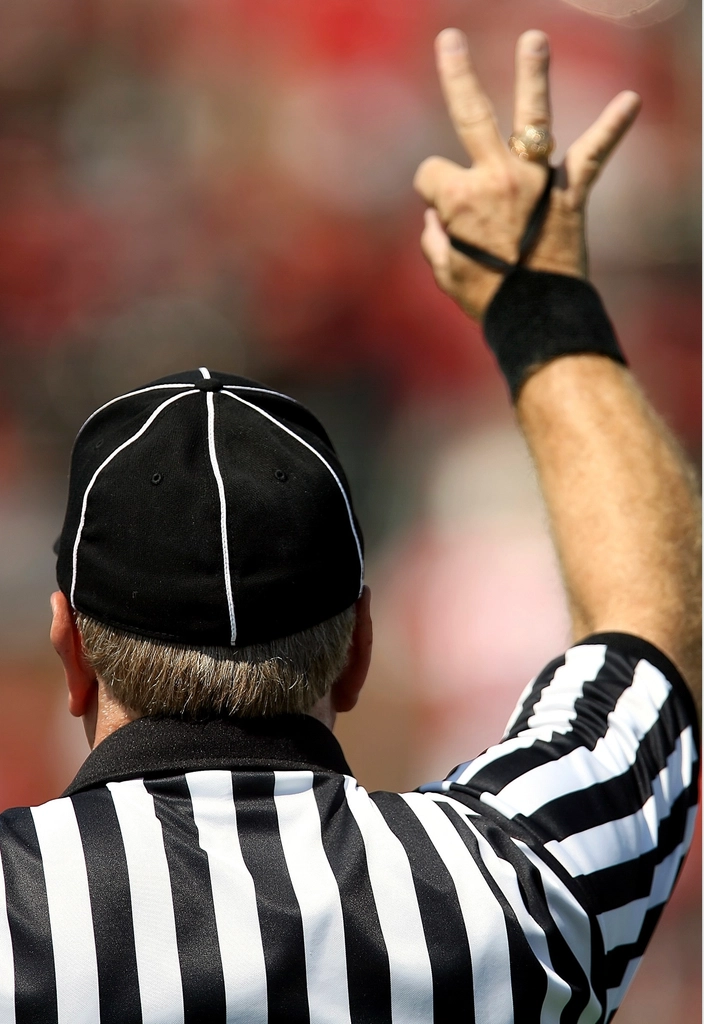
The one role every league needs and nobody wants
Amateur football has a recruitment problem that no amount of goodwill has solved. Leagues can find players, and with enough persuasion they can usually find coaches and secretaries. What they cannot find is referees. Across many countries, associations report the same pattern: they train reasonable numbers of new officials each season, and a large share of them stop within a year or two.
The consequences are visible every weekend. Matches played with a club linesman standing in, fixtures postponed, and increasingly a season structure that depends on a shrinking pool of people willing to be shouted at for two hours. If you have ever complained about the standard of officiating at your level, the uncomfortable answer is that the standard is a direct function of how the people doing it are treated.
This is a look at what refereeing an amateur match is actually like, why the retention problem exists, what it takes to try it, and what everyone else can do to make the job less thankless.
What the job involves on a normal Sunday
The ninety minutes are the visible part and the smallest part. A typical local appointment absorbs a good half-day once travel and preparation are counted.
- Before the match. Confirming the appointment, checking the venue and kick-off time, arriving early, inspecting the pitch and the goal nets, checking studs and jewellery, verifying team sheets and player registrations where the league requires it.
- The match itself. Ninety minutes of continuous concentration, covering six to nine kilometres, making several hundred small judgements, most of which nobody notices and a handful of which somebody will remember for a year.
- After the match. Collecting the fee, completing the match report, submitting scores, recording cautions and dismissals, and occasionally writing a longer report on an incident, which can take considerably more time than the game did.
- Across the season. Fitness work, keeping current with law changes, attending society meetings or refresher training, and being assessed if you are progressing through the levels.
The fee for a local adult match typically covers travel and a modest amount beyond it. Nobody referees at this level for the money, which is worth remembering before you tell one they are being paid to be there.
Why so many stop
Abuse is the headline reason
Surveys of referees who quit return the same answer with depressing consistency: verbal abuse, intimidation and, in a minority of cases, physical confrontation. It is rarely a single dramatic incident. It is the accumulation — the constant background dissent, the sarcasm from the touchline, the player who follows you fifteen metres to explain that you are cheating, and the sense that this is simply expected in the role.
Youth football is often worse than adult football, and the abuse there generally comes from adults on the touchline rather than the children playing. Referees in their teens, who are the majority of new recruits in many associations, are frequently the ones absorbing it.
The isolation
A player who has a poor game has ten teammates who understand. A referee who has a poor game drives home alone, replays it, and has nobody to talk it through with unless they have found a local society or a mentor. Refereeing is the only role in football with no dressing room.
The administrative load
Reports, systems, appointment platforms, disciplinary paperwork. Much of it is necessary, and all of it lands on a volunteer’s weekday evening after the match has finished.
The expectation of perfection
Television has trained everyone to judge decisions from four camera angles in slow motion. A local referee has one angle, one look, no assistants who are not club officials, and half a second. The gap between what people expect and what is physically possible is enormous, and it is rarely acknowledged.
Why people do it anyway
It would be misleading to describe the role purely as an ordeal, because the people who stay are usually emphatic about how much they get from it.
- It keeps you in the game. For anyone whose knees, ankles or calendar have ended their playing days, refereeing is the most direct way to stay involved in a sport they love.
- It is genuinely good exercise. Six to nine kilometres of varied-pace running each week, with a fixed commitment that gets you out of the house, is a serious contribution to cardiovascular fitness.
- It teaches skills that transfer. Managing conflict, holding a decision under pressure, reading a room, communicating clearly with people who disagree with you. Few hobbies build those as directly.
- There is a clear path. Unlike most amateur roles, refereeing has a structured progression through levels, with assessment and promotion, for anyone who wants ambition rather than just a Sunday.
- The satisfaction is real. A tight match, well managed, with both sides shaking your hand afterwards, is a specific and quite rare pleasure.
Trying it: what is actually required
The course
Most associations run an entry-level referee course that takes a few days spread over a couple of weekends, or an equivalent online and in-person mix, at a modest cost. It covers the Laws of the Game, practical positioning, signalling, and safeguarding. Minimum ages are usually in the mid-teens, with restrictions on what age groups a young official may take charge of.
The kit
A shirt, shorts, socks, a whistle, two watches, cards, a notebook and a coin. It is not an expensive start, and many leagues or societies help newcomers with the initial outlay.
The first season
Expect to start on youth or lower-division adult football, expect to be nervous, and expect to make mistakes that feel much larger to you than they do to anyone else. The most common advice from experienced officials is to referee often in that first year, because confidence comes from volume rather than from study.
Find a society or a mentor immediately
This is the single strongest predictor of whether a new referee lasts. A local referees’ association gives you people who understand exactly what your Sunday was like, someone to check your interpretation of an incident, and the reassurance that the difficult moments are universal rather than a sign that you are bad at it.
How players, coaches and parents can help
The referee shortage is not going to be fixed by recruitment campaigns while retention stays where it is. Almost all of the fix belongs to everyone else.
- Let the captain speak. One player, calmly, for genuine clarification. Nine players surrounding an official is intimidation regardless of the tone anyone thinks they are using.
- Say something when a teammate crosses the line. Peer pressure from inside a squad changes behaviour far faster than a caution does, and it costs the referee nothing.
- Manage the touchline, especially in youth football. A designated adult who quietly reminds parents what is acceptable prevents most of the incidents that drive teenage referees out of the game.
- Say thank you afterwards. A handshake and a word at full time is a small thing that officials remember, particularly after a difficult match.
- Accept the decision and move on. Every referee in the country has made a mistake this weekend, exactly as every player has misplaced a pass. Neither is a moral failing.
- Report serious abuse properly. Leagues can only act on what is recorded. Clubs that handle this seriously build a reputation that gets them better officials.
A small shift with a large effect
Refereeing is a demanding, unpaid, largely invisible job that keeps recreational sport running. The people who do it are usually there for the same reasons everyone else is: they like football, they want the exercise, and they enjoy being part of something on a Sunday morning. They just happen to be the only participant who gets criticised for the whole ninety minutes.
If more clubs treated the official as a fellow volunteer rather than an obstacle, the retention numbers would improve, the standard would rise, and the fixtures would get played. And if you have ever thought about trying it, the shortage means there has never been a better time — you will be wanted, you will be busy, and you will see the game in a way that no amount of playing ever teaches you.