
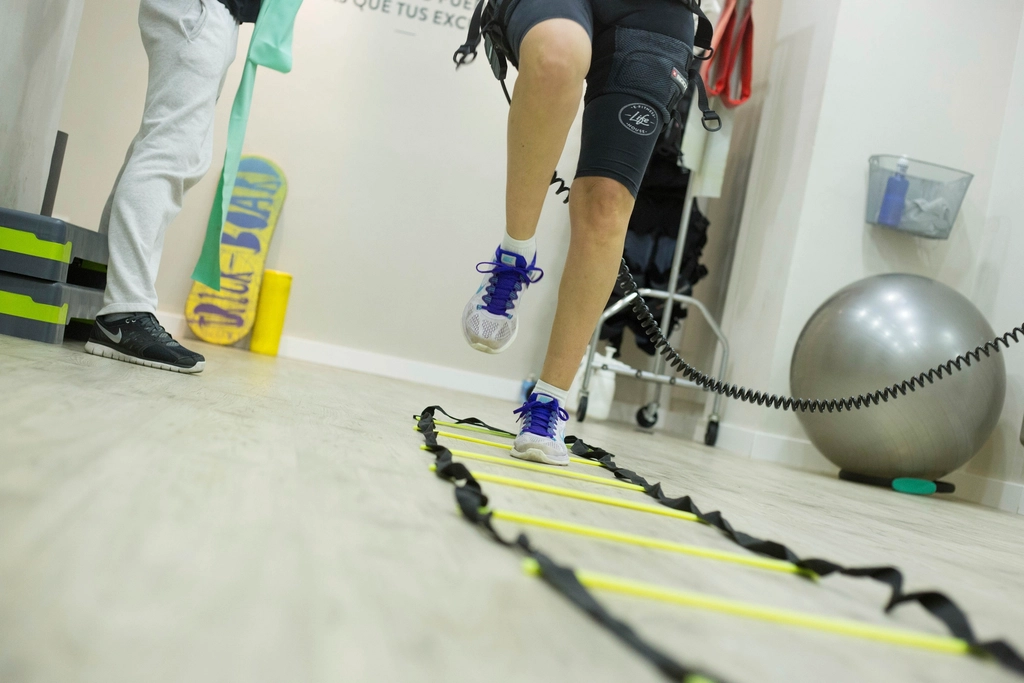
The injuries that arrive quietly
Acute injuries announce themselves. There is a tackle, a bad landing, a moment you can point to afterwards. Overuse injuries do not work like that. They begin as a mild ache that fades once you are warm, which is precisely what makes them so easy to ignore. A few weeks later the ache is present at the start and end of the session. A few weeks after that it is present when you walk downstairs, and the thing that would have needed a fortnight of sensible adjustment now needs several months.
Across recreational sport, overuse problems account for a very large share of the time people lose. They are also the most preventable category, because they follow a pattern: tissue is loaded more than it has been prepared for, too often, without enough time in between. Understanding that pattern is worth more than any single stretch or piece of equipment.
Why tissue fails gradually
Tendon, bone and cartilage all adapt to load, which is why training works at all. They simply adapt at different speeds. Muscle responds within days to weeks. Tendon responds over weeks to months. Bone remodelling is slower still. If your training increases faster than the slowest tissue can keep up, you accumulate small amounts of damage that never quite finish repairing.
This explains the classic sequence. Someone joins a new team, or decides to get fit, and increases from one session a week to four. For three weeks it goes brilliantly — the muscles adapt quickly and everything feels easy. In week five something hurts. Nothing went wrong on any single day. The load simply outran the adaptation.
The usual suspects
Achilles tendinopathy
Pain and stiffness in the tendon above the heel, typically worst in the first steps of the morning and at the start of a session, easing with warmth and returning afterwards. Common in sports with repeated sprinting and calf loading. It responds well to a graded loading programme — and badly to complete rest, which weakens the tendon further.
Patellar tendinopathy
Pain at the front of the knee, just below the kneecap, aggravated by jumping, decelerating and stairs. Frequent in players who have recently increased explosive work or moved to a firmer surface.
Shin splints
Diffuse aching along the inner shin, typically after increases in running volume or a change of surface or footwear. The important distinction is between this and a stress fracture: a stress fracture is usually pinpoint tenderness on the bone, worsening rather than warming up, and needs proper assessment rather than perseverance.
Plantar heel pain
Sharp pain under the heel, notoriously worst with the first steps after sleeping or sitting. Associated with increases in walking or running load, and with calf tightness.
Groin and hip pain
Common in sports involving cutting, kicking and rapid direction change. Adductor-related pain in particular tends to build across a season and is strongly associated with insufficient adductor strength relative to the demands placed on it.
Hamstring problems
Although acute hamstring strains are the headline, chronic hamstring discomfort in sprint-based sport is common and often reflects a lack of eccentric strength — the ability to resist lengthening under load, which is exactly what happens at high speed.
How to avoid most of it
The evidence is reasonably consistent, and the interventions are less exciting than the marketing around them suggests.
- Progress load gradually. The single largest modifiable risk factor is a rapid increase in training. Change one variable at a time, and give each change two or three weeks to settle before adding another.
- Do strength work. Strength training reduces sports injury rates substantially across the research literature. Two short sessions a week covering calves, hamstrings, quadriceps, hips and adductors does most of the job.
- Train eccentrically. Controlled lowering under load — slow heel drops, Nordic-style hamstring work, gradual descents — builds precisely the capacity that fails in tendon injuries.
- Keep one genuinely easy day after the hardest one. Adaptation happens between sessions, not during them.
- Vary the surface and the stimulus. Doing exactly the same thing on exactly the same ground concentrates load in exactly the same tissue.
- Respect sleep and food. Under-slept and under-fuelled athletes get injured more. This is not a motivational slogan; it is a consistent finding.
- Replace worn footwear. Not because expensive shoes prevent injury, but because a sudden change in support after months of degradation is itself a load change.
Reading the pain honestly
Not all discomfort means stop, and treating every twinge as catastrophic is its own problem. A workable framework used widely in rehabilitation grades pain during activity on a simple scale.
- Mild and stable is usually acceptable. Low-level discomfort that does not worsen through the session, and settles within twenty-four hours, generally allows continued activity at a reduced level.
- Increasing through the session is a stop signal. Pain that builds as you go means the tissue is not tolerating the load today.
- Worse the next morning means you did too much. Reduce, do not repeat.
- Limping is never acceptable. If your movement pattern changes to protect something, you are loading other tissues abnormally and creating the next problem.
- Night pain, swelling or locking needs assessment. These are outside the ordinary overuse picture.
What to do when something starts hurting
Early management is mostly about reducing load rather than eliminating it. Cut volume, remove the specific aggravating element — usually sprinting, jumping or hills — and keep moving in ways that do not provoke symptoms. Complete rest often feels better for a fortnight and then leaves you returning to sport with a weaker tendon than you started with.
Alongside that, begin loading the tissue deliberately and progressively, within tolerable pain. For most tendon problems this means slow, heavy, controlled work with adequate rest between sets, built up over weeks. Progress is measured over months rather than days, which is the part most people find hardest.
Passive treatments — massage, taping, needling, various devices — may provide short-term symptom relief that makes rehabilitation more comfortable. They are not, on their own, treatments, and it is worth being sceptical of anything presented as a cure without a loading programme attached.
Getting help, and when
See a qualified professional — a physiotherapist or your doctor — if pain persists beyond two to three weeks of sensible self-management, if it is worsening despite reduced load, if it wakes you at night, if there is significant swelling, or if you cannot bear weight normally. Also seek assessment promptly for suspected stress fractures, for any pain in a bone rather than a soft tissue, and for symptoms such as numbness, pins and needles or weakness, which suggest something other than simple overuse.
This article is general information for healthy adults in recreational sport, and is not a substitute for individual medical assessment. A diagnosis over the internet is a guess; a diagnosis from someone who has examined you is not. If you have an existing condition, a previous significant injury, or you are unsure, get it looked at rather than working from an article.
A slower approach that ends up faster
The uncomfortable truth about overuse injuries is that they are usually caused by enthusiasm rather than neglect. People get injured because they are keen, because they finally found something they enjoy, and because progress felt good enough to accelerate. There is nothing wrong with the enthusiasm — only with the timeline.
Adding a month to your build-up costs a month. Ignoring an Achilles for six weeks can cost half a year. Someone who progresses conservatively for three seasons will have trained far more, and enjoyed far more of it, than someone who progresses aggressively and spends every third month recovering. Staying available is the underrated skill in recreational sport, and it is almost entirely built out of small, dull, patient decisions.