
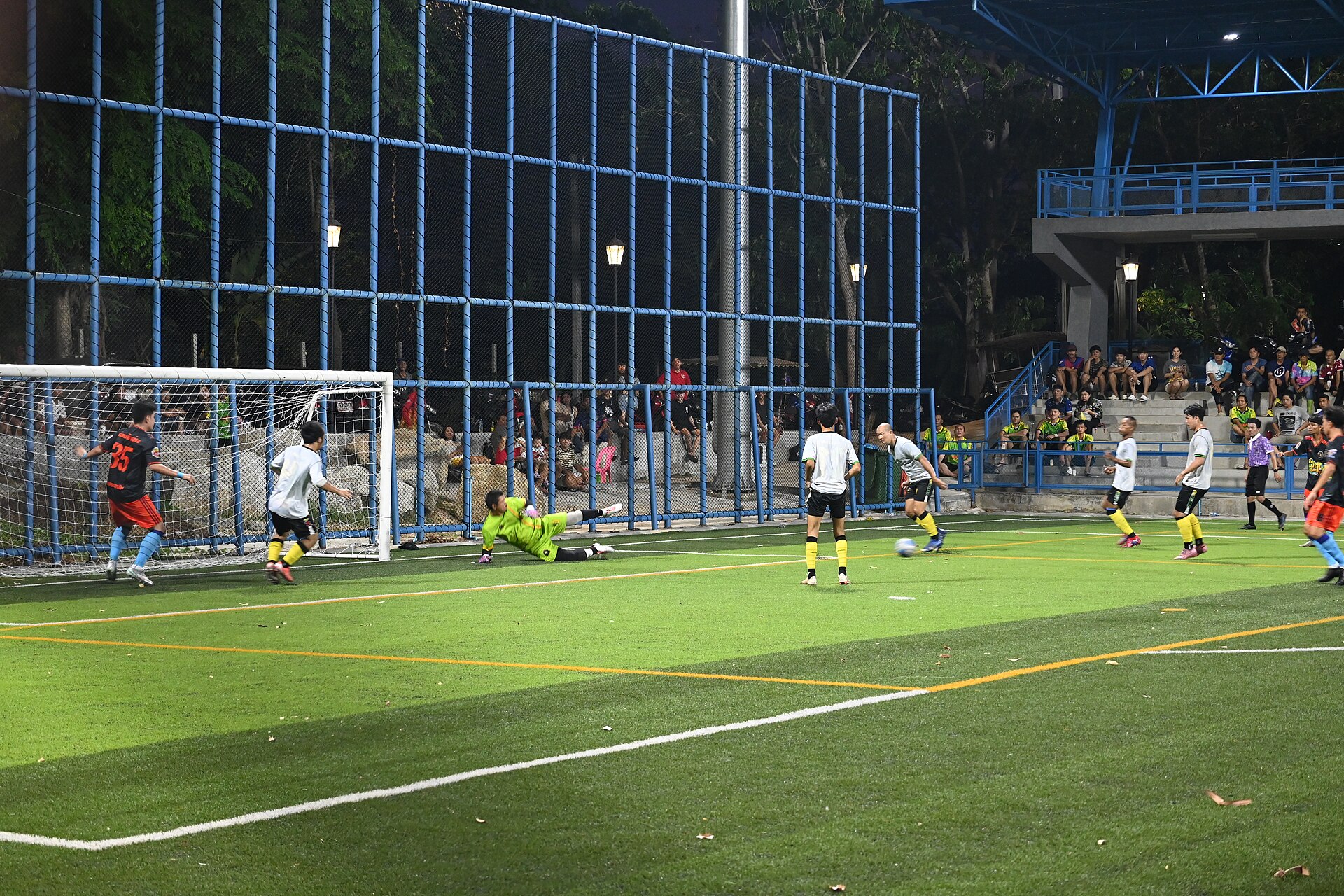
Eustress and distress are two experiences of the same thing: stress. Eustress challenges you without overwhelming you, while distress arrives when the demand exceeds what you feel able to cope with. For an amateur footballer, that difference is often the line between nerves that sharpen you and nerves that cloud your judgement.
What is the difference between eustress and distress?
Stress is the body’s response to a demand that requires adaptation. That demand can be pleasant or unpleasant, external or internal, and it is a normal part of being alive. What changes the outcome is how the demand sits against your ability to meet it.
Eustress is the beneficial version. It shows up when you are challenged but still able to cope, and it tends to bring excitement, motivation and a sense of purpose. Distress is the harmful version. It appears when the pressure outstrips your coping skills, and it leaves you overwhelmed rather than energised.
This is why the same event can land differently on different people, or on you from one week to the next. Perception and response matter as much as the event itself. A fixture that feels like a chance to test yourself one month can feel like a threat the next if you are tired, injured or short of confidence.
Understanding the why gives you something practical. If stress is not automatically the enemy, the goal stops being to remove nerves and becomes keeping them in a range where they work for you.
What is happening in your body when stress turns?
When you meet a challenge, your body releases stress hormones, including cortisol and adrenaline. They prepare you to deal with something that feels important: your attention narrows, your energy is mobilised and your body gets ready to act. Short bursts of this response, followed by proper recovery, can build resilience instead of wearing you down.
Two branches of the nervous system share the work. The sympathetic branch drives the fight-or-flight response, and the parasympathetic branch promotes relaxation and recovery. Neither is good or bad. Trouble comes when one stays switched on and the other never gets its turn.
That is the physical logic behind distress. When the demand is too great or lasts too long, the system stays in its alert state, and prolonged or excessive exposure can affect mental health, with anxiety among the better-known consequences. For a footballer, the practical symptom is not a dramatic collapse. It is a match where everything feels slightly too fast, your thinking is cluttered and your body will not settle.
The encouraging part is that the response is not entirely fixed. Learning to work with your own stress response, rather than being swept along by it, can create a small pause before you react. That pause is where the techniques later in this article do their work.
How do eustress and distress look on the pitch?
Abstract definitions are easier to use once you can see them in familiar situations. Here are three common ones, with each type of stress described in turn.
A penalty shootout
Eustress here feels like heightened alertness. You are aware of the occasion, your routine is clear and the walk to the spot feels like a task you are ready for. Distress feels like a flood of thoughts about the consequences, a rushed run-up and a sense that the moment is bigger than you.
A promotion decider
With eustress, the stakes give you energy and a reason to prepare well. With distress, the stakes become a weight, and the match is played in the future, as if it were already won or lost, rather than in the minute you are actually in.
Returning from injury
Eustress shows up as healthy motivation to rebuild and a willingness to test yourself in sensible steps. Distress shows up as fear of the same body part failing again, which can make you hesitate in challenges or push too hard to prove you are back.
In each case, the event is identical. What differs is whether you feel challenged but capable, or stretched beyond what you can handle. Noticing which side you are on is the first skill, and it costs nothing.
Which three techniques move you toward eustress?
None of the following removes pressure. They shift how you meet it, which is the part within your reach. Treat them as habits to practise before they are needed, because a technique first tried in a crisis rarely works.
Controlled breathing before kick-off
Slow, deliberate breathing is a way of engaging the calming side of your nervous system on purpose. Find a quiet spot in the changing room or on the touchline, breathe in gently through the nose and let a longer, unhurried breath out. Keep going for a few minutes until your shoulders drop and your thinking slows. The aim is not to feel sleepy but to arrive steady.
Reframing your self-talk during the warm-up
The way you describe a situation to yourself influences whether you read it as a threat or as a challenge. Instead of telling yourself you cannot afford to make a mistake, try phrases that point to what you can do, such as looking for the ball or keeping your first touch simple. This is a way of seeing demanding moments as chances to use your skills, and it works best when the wording is short, believable and in your own voice.
Journalling after the match
Recovery is part of how stress becomes useful rather than harmful. A few lines written after a game, win or lose, help you notice what raised your tension, what helped, and what you would do differently. Over a season, patterns appear. You may find that certain fixtures, travel days or sleepless nights reliably tip you toward distress, and that is information you can act on.
When should you do more than adjust your approach?
Eustress and distress sit on a spectrum, and the techniques above suit everyday competitive pressure. They are not a substitute for support when stress has stopped being occasional. Distress is a signal that something about how you are dealing with the demands may need to change.
Practical steps help here. Identify what is actually driving the pressure, whether that is selection worries, work demands that spill into your training week, or expectations you have placed on yourself. Sort and prioritise what you can control, and talk to someone you trust, such as a teammate, a friend, family or a professional counsellor.
Look after the basics too. Sleep, regular meals and sensible rest between sessions give your body the recovery it needs for stress to remain a short-term, manageable event. Setting boundaries matters as well. Saying no to an extra commitment in a heavy week is not a lack of dedication, it is how you protect your ability to enjoy the game.
If anxiety is persistent, if you avoid matches because of it, or if your mood has dropped for a long time, speaking to a health professional is the sensible next step. Football can be a good outlet for stress, but it works best alongside, not instead of, proper support.
Frequently asked questions
Is all stress bad for my football?
No. Eustress is a positive form of stress that motivates and energises you when a challenge is demanding but still manageable. It is distress, where the pressure exceeds your ability to cope, that tends to overwhelm and weaken your play.
Can I turn distress into eustress before a match?
Often you can shift it, though not by willpower alone. Reframing the situation as a challenge, using calming breathing and looking after sleep and recovery all help you meet the demand with more confidence. If the pressure feels constantly overwhelming, it is worth addressing its causes rather than only managing it on match day.
Why do I feel fine some weeks and overwhelmed in others?
Stress depends on how a demand compares with your coping resources at that moment. Tiredness, an injury, work pressure or low confidence can make the same fixture feel much heavier. Keeping a short post-match journal helps you spot what changes from week to week.
Should I try to remove my pre-match nerves completely?
Not necessarily. A degree of arousal can sharpen attention and add motivation, so the practical goal is to keep it in a range where it helps. Techniques such as slow breathing and positive self-talk aim to steady you, not to flatten all feeling.
Related reading
- Hydration and Everyday Nutrition for Amateur Athletes
- Recovery Between Sessions: Rest, Sleep and Why It Is Not Optional
Sources
- compare and contrast eustress with distress (manthanhub.com, accessed 2026-11-23)
- Distress vs. Eustress: Strategies for Coping with Stress and … (indyvit.com, accessed 2026-11-23)
- Eustress vs Distress: Good Stress vs Bad Stress Explained (myritual.com.au, accessed 2026-11-23)
Photo: DFC 5336 A tense moment as a striker fires a shot on goal while the goalkeeper dives to make the save during a nighttime amateur soccer matc, by PattayaPatrol, CC BY-SA 4.0 (Wikimedia Commons)