
The small game is not a smaller version of the big one
Most adult players meet futsal or indoor five-a-side sideways. The grass season stops in November, someone books a sports hall on a Tuesday, and it gets called ticking over until March. That framing sells it short. The small game has its own logic and its own rewards, and treated as a holding pattern it gives you very little beyond a sweat.
It helps to separate two things that get lumped together. Futsal is a codified sport with its own laws, played on a hard court with a smaller, heavier, low-bounce ball and no walls. Indoor five-a-side, as most of us play it, is a hall or a caged 3G pitch with rebound boards and whatever house rules the venue has settled on. Futsal rewards close control and structured rotations; cage five-a-side rewards using the walls. Knowing which you have booked tells you what you are actually training.
What changes when the pitch shrinks
The obvious change is space. The less obvious change is time. On a full pitch a midfielder receiving in a pocket might have a second before a challenge arrives; indoors that shrinks to a heartbeat. Everything has to be pre-loaded: you need your next pass decided before the ball reaches you, because there is no window to look up afterwards.
The ball itself
A proper futsal ball is smaller and damped so it barely bounces, which is not the detail it sounds like. A low-bounce ball stays on the floor, available to your feet rather than kicking up to your shins, so you manipulate it constantly instead of controlling it once and moving on. Play a term of that and you notice the difference the first time you take a ball on wet grass.
The surface and the boundaries
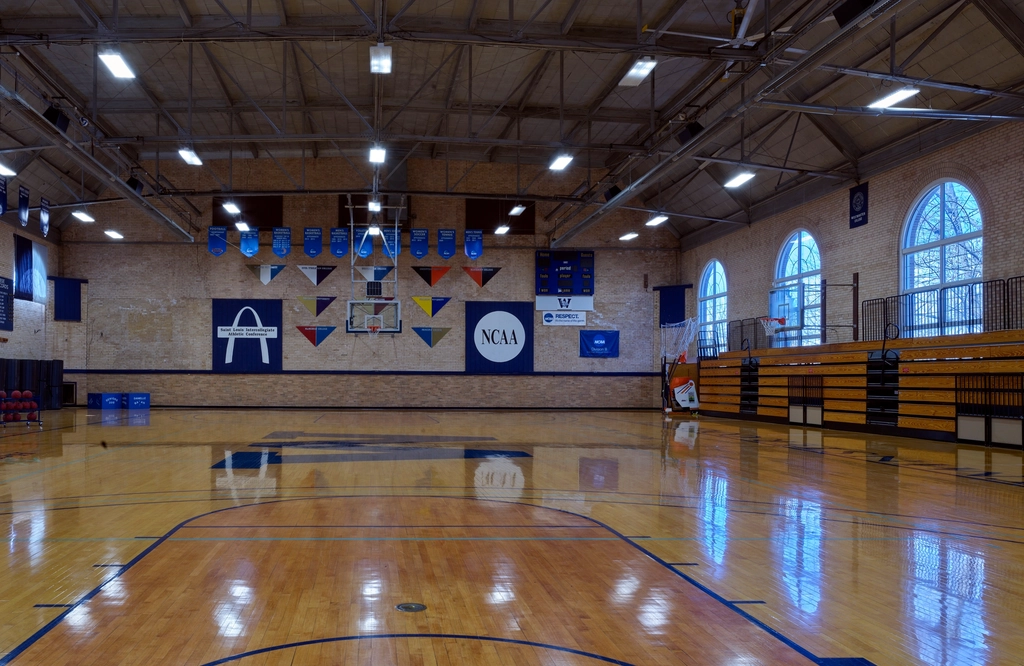
A sports hall floor is fast and true. There is no divot to save you and no long grass to slow a heavy touch, so passes arrive at the pace they were struck. In a cage the boards change the geometry entirely: a wall is a teammate who never mistimes a return. Neither is realistic preparation for a boggy pitch in January, and that is fine.
What it does for your touch
Ask anyone who came to eleven-a-side from futsal what stands out and you get the same two answers: sole control, and receiving on the half-turn.
The sole of the foot
The small game teaches you to use the underside of the boot to stop, drag and roll the ball. Outdoors you rarely need it. Indoors it becomes the default, because it is the fastest way to kill a ball and change its direction without a big touch that gives it away. It comes back out onto grass as a general improvement in how quickly you settle a ball in a tight area near the touchline.
Receiving with your body already open
Because pressure arrives instantly, you learn to check your shoulder and open your body before the ball is played. This is the most portable thing the small game gives an outdoor player: not a trick but a habit, and habits built under constant pressure hold up when the pressure is only intermittent.
Decision-making, repeated far more often
In an hour of eleven-a-side a recreational midfielder might touch the ball a few dozen times. In an hour of five-a-side, with rolling subs and a court a fraction of the size, the number is far higher. No fabricated statistic is needed — count your own touches in one indoor game.
More touches means more decisions, and more decisions means faster pattern recognition. You run through the same small catalogue of problems repeatedly: a defender closing from your left, a runner going behind, a shot that is on for half a second. Repetition under mild stress is how those choices stop being choices.
Boots, floors and the footwear question
This is where people get it wrong most often, and where a venue is likeliest to turn you away.
- Sports hall means flat, non-marking soles. Gum rubber or similar. Studs are usually banned outright, partly to protect the floor and partly because a stud that catches on a sprung wooden surface gives your knee nowhere to go.
- Cage or indoor 3G means a turf sole or a flat trainer. Short rubber pimples across the whole sole spread the load and let the foot rotate. Firm-ground moulded studs on a shallow carpet feel grippy and unstable at once, which is the worst of both worlds.
- Old running trainers are a poor substitute. They are built for straight-line heel strike, the soft high heel rolls under lateral load, and the outsole is often marking. Fine for one session, not for a season.
- Indoor shoes wear out quietly. The rubber goes glassy before it looks worn. If you are sliding on turns you used to make comfortably, check the sole before you blame the floor.
The honest bit about your body
Indoor football is harder on some tissues than the outdoor game. That is not scaremongering, it is geometry. A hard, high-grip surface with constant stopping, turning and short accelerations puts repeated load through ankles, knees and calves, with no give underfoot to absorb any of it. It is well established that sudden changes of direction on a planted foot are a common injury mechanism in court sports generally.
How that translates to any individual amateur is far less certain. Research on surface, footwear and injury rates in recreational players is mixed, samples tend to be small, and the confounders — fitness, playing history, age, how often you play — are hard to separate. Anyone quoting a precise risk figure for your Tuesday session is guessing.
What holds up as sensible practice is unglamorous. Build your indoor volume gradually rather than going from nothing to twice a week. Warm up properly even though the hall is already warm, because a warm room is not a warm calf. Treat persistent calf and Achilles soreness as information, since those tissues take the brunt of a hard floor. If a joint swells, or a niggle is not settling over a couple of weeks, see a physiotherapist or a doctor. This is not medical advice — it is general information from someone who plays, not from a clinician who has looked at you.
Why winter indoors is more than a stopgap
Treated as a fill-in, the small game gives you fitness you would have got anyway. Treated as its own thing, it gives a season of concentrated technical work at exactly the time of year when outdoor training is often unusable — frozen pitches, floodlights covering half the surface, sessions called off at six o’clock.
There is a second benefit clubs undervalue. Winter is when amateur sides lose people. Nobody formally quits; they just stop coming, and by March they have found something else to do with a Saturday. A regular indoor slot keeps a squad in contact when no fixture list is holding it together. Plenty of clubs work out afterwards that the hall booking did more for retention than any of their recruiting.
Getting something out of it, practically
- Book the same slot every week. Consistency beats a better venue at an inconsistent time. People plan around a fixed Tuesday; they do not plan around a weekly poll in a group chat.
- Keep the numbers honest. Five or six a side on a full court is a game. Nine a side is a scrum, the touches per player collapse, and most of the benefit goes with them.
- Play one theme for a few weeks. Two-touch, or no shooting from outside a line, or every attack must use the wall once. Constraints teach faster than instructions, and nobody has to stand on the side shouting.
- Do not let it become a separate squad. If the indoor group drifts from the outdoor one you have two half-clubs. Invite the fringe players first; they benefit most and are the likeliest to drift away.
Come March, the players who took the winter seriously turn up sharper on the ball than those who spent the same weeks on a treadmill. The legs need a fortnight to remember what a full pitch costs, and your first long diagonal will go out for a throw. But the touch is there, and so is the habit of looking before you receive.